The whispers of quantum computing have grown into a roar of innovation, promising to reshape industries and unlock solutions to problems once deemed insurmountable. While still in its nascent stages, the field is experiencing rapid advancements, moving from abstract theory to tangible hardware and software. Imagine a world where material science can be revolutionized through unprecedented simulation accuracy, where drug discovery is accelerated by orders of magnitude, and where complex optimization problems in finance and logistics are solved in the blink of an eye. This isn’t science fiction; it’s the potential of quantum computing. In this article, we’ll explore the recent breakthroughs, the fundamental concepts that drive them, and what these advancements mean for our future.
The Quantum Leap: What’s Driving the Breakthroughs?
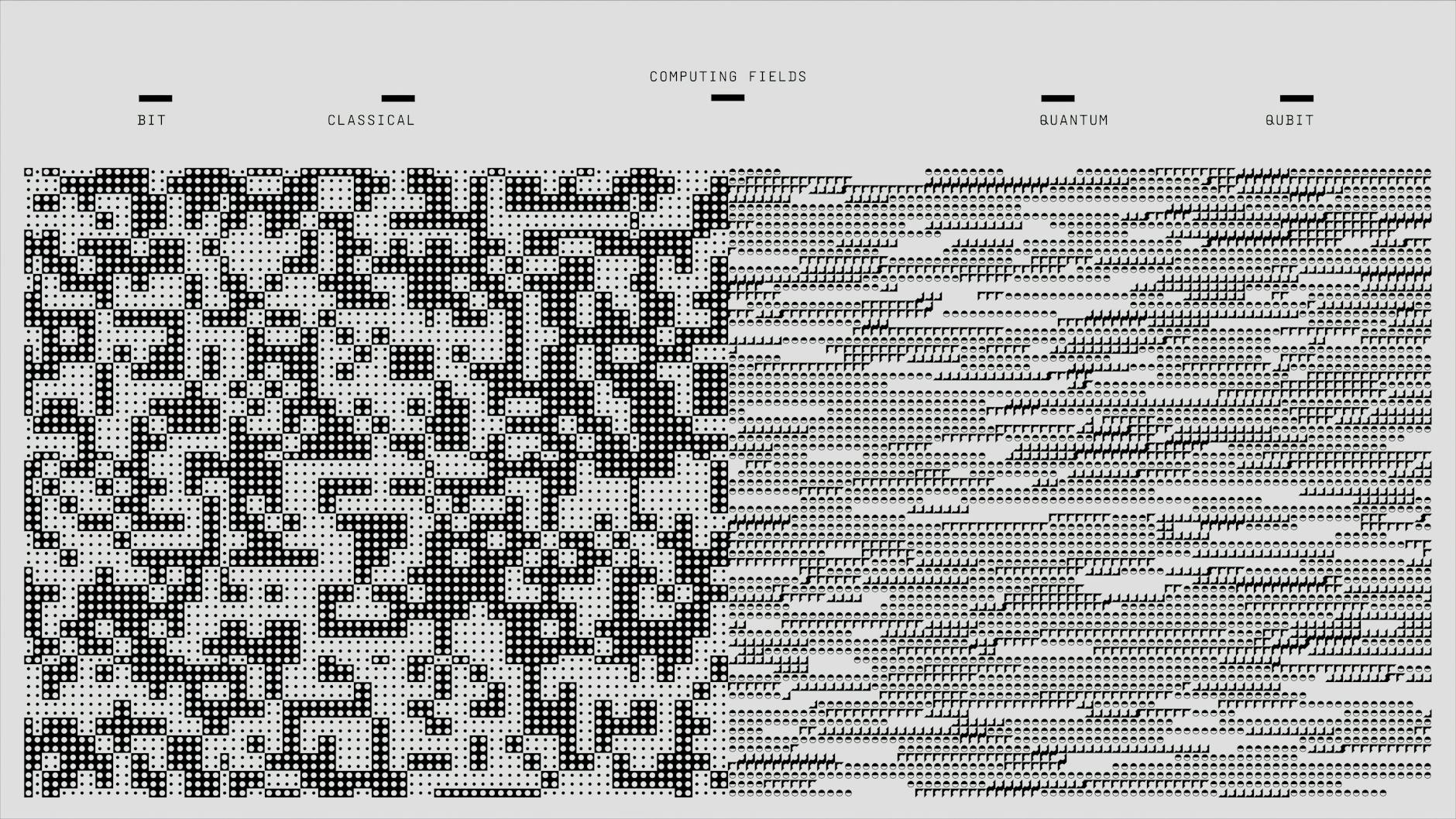
At its core, quantum computing leverages the peculiar laws of quantum mechanics to perform calculations. Unlike classical computers that use bits representing either 0 or 1, quantum computers use qubits. Qubits can represent 0, 1, or a superposition of both states simultaneously. This capability, combined with phenomena like entanglement (where qubits become intrinsically linked, regardless of distance), allows quantum computers to explore a vast number of possibilities concurrently. Recent breakthroughs are largely driven by advancements in qubit stability, error correction, and the development of more robust quantum hardware architectures. Researchers are finding ways to create more qubits that remain coherent (maintain their quantum state) for longer periods and are developing sophisticated methods to mitigate the inherent noise and errors that plague quantum systems.
Hardware Advancements: From Bits to Qubits
The physical realization of quantum computers is progressing rapidly across several different technological platforms. Superconducting qubits, which operate at near absolute zero temperatures, remain a leading contender, with companies like IBM and Google making strides in increasing qubit counts and coherence times. Trapped ions, where individual atoms are held in place by electromagnetic fields and manipulated with lasers, offer high fidelity and long coherence times, championed by firms like IonQ. Neutral atoms, silicon-based qubits, and topological qubits are other promising avenues, each with its unique strengths and challenges. Even smaller-scale, yet powerful, quantum devices are becoming more accessible for research and development, allowing a wider range of scientists to experiment with quantum algorithms.
Software and Algorithm Development: Unlocking Quantum Power
Breakthroughs aren’t limited to hardware; the software and algorithms that harness quantum power are also evolving. Quantum algorithms like Shor’s algorithm (for factoring large numbers, with implications for cryptography) and Grover’s algorithm (for searching unsorted databases) continue to be refined. More practically, variational quantum algorithms (VQAs) are emerging as a key approach for near-term quantum computers. These hybrid quantum-classical algorithms are designed to handle the limitations of current noisy, intermediate-scale quantum (NISQ) devices. They use quantum computers for specific, complex tasks while relying on classical computers for optimization and control, making them suitable for problems in fields like quantum chemistry, materials science, and machine learning.
Industry Impact and Future Potential
The implications of quantum computing extend across virtually every sector. In pharmaceuticals, quantum simulations could drastically speed up drug discovery and design by accurately modeling molecular interactions. Material scientists envision creating novel materials with unprecedented properties, from superconductors to more efficient catalysts. The financial industry is exploring quantum computing for portfolio optimization, risk analysis, and fraud detection. Logistics and supply chain management could benefit from optimizing complex routing problems. However, it’s crucial to remember that widespread practical applications are still some years away. Current quantum hardware is not yet powerful enough to outperform classical computers for most real-world tasks, but the direction of travel is clear.
Navigating the Quantum Frontier
Recent breakthroughs in quantum computing, spanning hardware stability, error correction, and algorithm development, signal a significant shift from theoretical possibility to practical development. Platforms like superconducting qubits and trapped ions are maturing, while hybrid quantum-classical algorithms are making these nascent machines useful for complex problems. While the era of quantum supremacy for everyday tasks is still on the horizon, the potential impact on fields such as medicine, materials science, and finance is immense. Early adoption and continued research are vital for organizations aiming to leverage this transformative technology. The quantum journey is just beginning, and staying informed about these advancements is key to preparing for a future reshaped by quantum innovations.
Image by: Google DeepMind
https://www.pexels.com/@googledeepmind